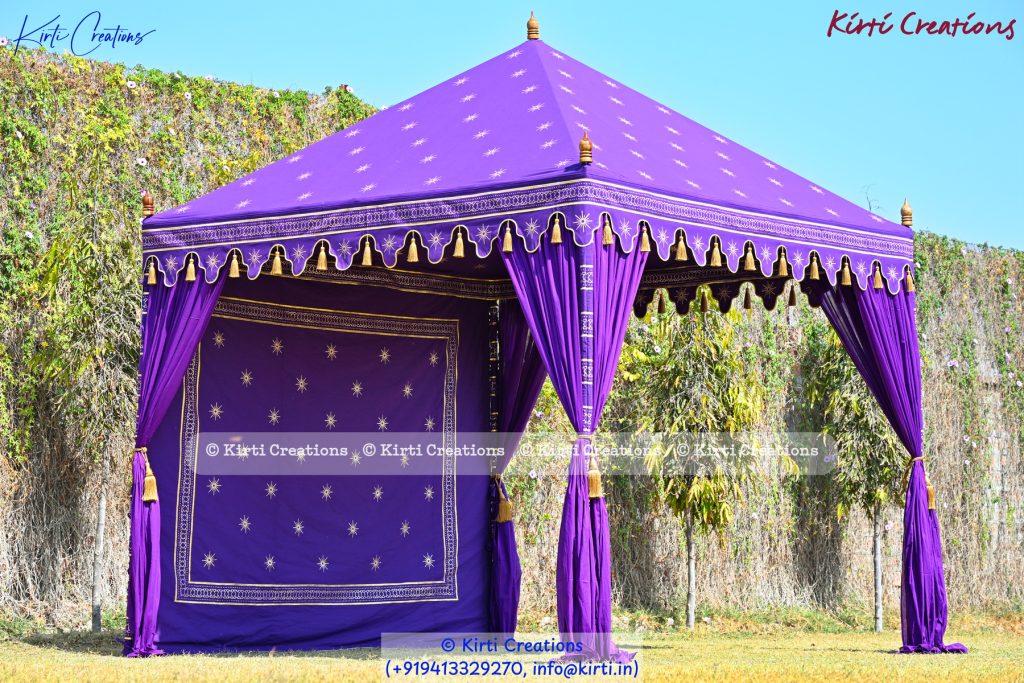
There is a certain magic to a residence under canvas, one that stands composed through a monsoon downpour in the morning and a golden desert evening by night. But that composure is never an accident.
A true all-weather Swiss tent is engineered long before it is decorated. The chandeliers, the block-printed ceilings, the silk cushions, all of it rests on decisions made about fabric, frame, and flooring.
If you are commissioning a Swiss cottage tent for a palace resort, a private estate, or a luxury camp, here are the six features to examine before you sign anything.
Why All-Weather Engineering Defines a True Swiss Cottage Tent
For a heritage property or royal residence, a tent is not a seasonal indulgence. It is a year-round asset, a suite that must welcome guests in January as graciously as it does in June.
So approach the purchase the way you would approach any fine acquisition: with a checklist. Inspect each of the following six features, ask your manufacturer how they achieve it, and only then decide. A luxury Swiss tent that masters the weather will serve your estate for a decade or more.
All-Weather vs Standard Swiss Tent: What Sets Them Apart
Not every Swiss tent qualifies for the word all-weather, and the difference is worth understanding before you compare a single quotation.
A standard Swiss cottage tent carries the classic silhouette, the pitched canvas roof, the veranda, and the elegant proportions, but it is dressed for fair weather. It performs beautifully through a mild winter season and retires gracefully before the rains arrive.
An all-weather Swiss tent keeps that same silhouette and re-engineers everything beneath it: layered fabrics in place of a single skin, an insulated shell instead of bare canvas walls, a frame braced for storms rather than breezes, and flooring that anticipates rain instead of fearing it. Same grace, entirely different constitution, and the six features below are precisely where that constitution shows.
The 6 Key Features to Look For in an All-Weather Swiss Tent
Each of these features protects against rain, wind, heat, and cold, determining whether your tent merely survives the seasons or performs beautifully throughout them.
- Layered, Double-Fly Canvas Construction
Check the layering first; everything else follows from it. A proper Swiss tent pairs a waterproof, rot-resistant outer fly with a breathable inner canopy, leaving a pocket of air between the two.
Ask the manufacturer how these layers manage condensation, because this is where lesser tents fail quietly. If your property sees heavy rains, insist on a treated waterproof canvas tent exterior with sealed seams.
What you gain: interiors that stay dry through a cloudburst and pleasantly cool through high summer, without a hint of damp on the linings.
- A Frame Built to Stand Unassisted
Choose a rope-free structure with a properly braced, powder-coated steel frame. Then ask the harder question: what wind speed has it been tested against?
A weatherproof tent structure should not lean on a web of guy ropes to keep its dignity. Ropes clutter the lawns, trip the guests, and betray the illusion of permanence.
What you gain: a tent that holds its ground through a storm and reads, from the veranda of the main palace, like a piece of standing architecture rather than a temporary arrangement.
- Insulated Interiors Ready for Climate Control
Confirm that the walls and ceiling carry insulated linings, and that the tent is wired and vented for both air-conditioning and heating. If your estate experiences true winters as well as scorching summers, as most of Rajasthan does, ask for thermal lining as standard, not as an afterthought.
What you gain: suite-grade comfort in every season. Guests should never sense the weather working against them; they should only sense that the room is exactly as they wish it.
- Raised Flooring and a Covered Veranda
Apply a raised base beneath the tent so that interiors sit well above rainwater run-off. Pair it with a deep, covered veranda at the entrance.
If the site slopes or gathers water in the rains, raise the decking further and confirm the drainage path before installation, not after.
What you gain: a morning tea ritual that carries on through a drizzle, and floors that stay immaculate no matter what the sky decides.
- A Complete Suite Layout with Attached Washroom
Pick a configuration that reads as a residence: a spacious bedroom at the centre, a lounge or sitting area, and a tent with an attached washroom at the rear, with hot water provisioned from the start.
Royal guests do not adjust their standards for canvas, nor should they have to. A Swiss tent for resorts must offer everything a fine suite offers, simply with better views.
What you gain: accommodation your guests describe as a residence, never as a shelter.
- Craftsmanship and Bespoke Detailing
Compare the finishing before you compare anything else: the hand-blocked ceiling prints, the valance work, the colour palette, the quality of the stitching along every seam. Then commission customisation that mirrors your estate’s own character, from heritage motifs to the exact shade of your family colours.
What you gain: a glamping tent that belongs to the property rather than merely sitting on it, an heirloom in fabric.
Conclusion
An all-weather Swiss tent should combine lasting performance with timeless elegance. When these six features are present: layered canvas, a self-standing frame, insulated interiors, raised flooring, a full suite layout, and true craftsmanship, an all-weather Swiss tent becomes exactly what it should be: a residence worthy of the name.
And that name earns its keep. A tent built to this standard performs through every season of the calendar, welcoming guests in monsoon and midwinter alike, which means it earns for the estate all year rather than half of it. Maintained well, it will do so for a decade or more, less a purchase, in the end, than an inheritance.