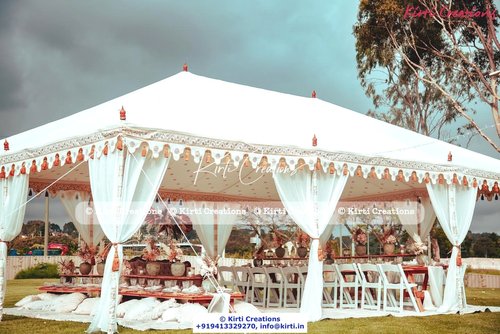
Most people will agree that the fabric of a luxury Mughal Tent is what makes it a luxury stay. It’s the first thing anyone sees while walking through the arched entrances.
But buyers are often not aware of how the differences in the fabric can change its overall appeal. The choice between hand-embroidered or printed fabrics is the main factor that differentiates them.
While it may sound like a cosmetic difference, the reality is that it actually changes the price, the durability, and the entire feel of the space.
So, to get a tent for a palace resort, a family wedding, or a private estate, this is the question owners should slow down for.
Why This Decision Shapes the Whole Tent
A Mughal tent has the aesthetic of royal courts of the Mughal era, which ancient artisans developed over centuries. The design has arches, pillars and artistry in deep maroons and golds that bring out a rare timeless elegance.
The fabric panels of the tents carry the heritage and keep weather elements at bay. In photographs, printed and embroidered panels may look similar. Standing under them for an evening can make you feel the difference.
Comparing Hand-Embroidery and Printed Finishes
Check How It’s Made
Hand-embroidery on a luxury Mughal tent typically means the artisans work on every panel with a needle. They use techniques like zardozi or karchobi. These metallic thread and raised-stitch methods were once used on royal canopies and elephant trappings for Mughal emperors.
Printed fabric has the pattern applied directly onto the cloth in a single run. Ask your supplier which method they are using before you agree on a design and not after the fabric arrives.
Compare the Texture and Colour
The raised motifs, metallic thread, and little differences between repeat designs can tell anyone that the fabric is embroidered by hand.
A printed panel is always flat to the touch even though the patterns look sharp. For events where the guests will sit near the walls, the embroidery on a Mughal royal tent should be on the spots that people actually touch and photograph. The print can be used on areas nobody’s really looking at closely.
Look at How Each One Ages
An easy test can help in choosing the most suitable type of fabric. By getting a sample panel and leaving it outdoors for a season, an estate owner can see its condition and decide. The structure and colour depth of hand embroidery will have little or no change even after repeated use, folding and storage.
Printed patterns can fade unevenly when the tents are used often and exposed to the sun. If the royal tent house is going into a resort that uses it season after season, this is an important point to consider.
Choose Hand Embroidery When Heritage Is the Point
Hand-embroidered panels are fit for a coronation-style event, a family wedding, or any occasion where the tent should be worth remembering. If the owners prefer techniques used in Mughal court settings, going for an ancient Mughal tent with zardozi or karchobi work is suitable.
Tents with hand-made embroidery take longer to make. Genuine handwork on this scale isn’t rushed, and any supplier promising otherwise is not being honest.
Choose Printed Panels When Scale Matters More Than Handwork
In case several large structures need to be made for one event, printed tent fabric is the right option. The patterns on the fabric repeat across many identical panels.
A tent can also have both printed sections and hand-embroidered panels. Prints will feature on back-of-house or utility areas. The portions where guests normally take photos, such as entrances and the main hall, will have hand-made embroidery.
Apply These Checks Before You Sign Anything
- Check the reverse side of the fabric: While genuine hand-embroidery has thread and knots on the back, printed material will be plain.
- Place the trial cloth under both daylight and lamplight: Metallic embroidery threads catch the light very differently from a printed work.
- Confirm the artisan region and technique in writing: If an authentic heritage of the Mughal royal tent is important to the owner, they should choose a workshop that can name its karigars and their training.
- Get the production timeline in writing beforehand: Hand embroidery can take months and not weeks, so getting a rushed quote is a warning sign.
Decide Based on the Legacy You Want to Leave
There’s no wrong answer here, as both finishes have their place, and a well-designed tent often blends the two with purpose. Knowing exactly what owners are paying for is important.
Check out a varied range of both embroidered and printed fabrics for Mughal Tents at Swiss Tent. Ask us for a swatch before you decide, as that is the fastest way to feel the difference for yourself.