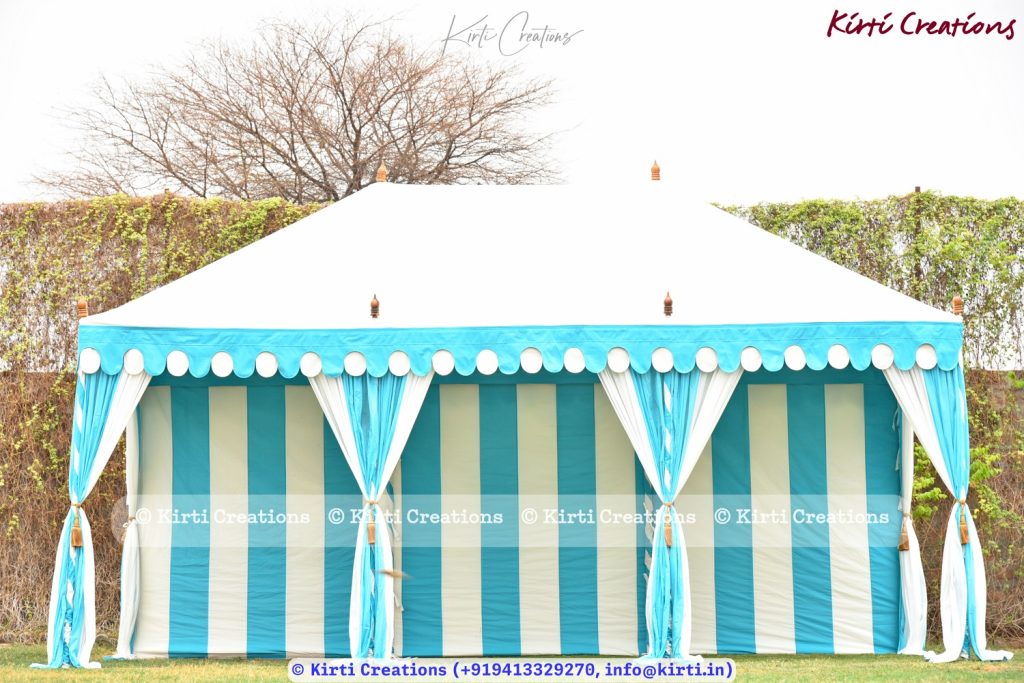
Canvas has made a remarkable return to Indian luxury hospitality. From the dunes of the Thar to apple orchards in the Himalayan foothills, the country’s most discerning travellers are now booking tents not in spite of what they are, but because of it.
Yet within this boom lies a quiet divide. Some tented properties flourish through every season; others fold their canvas by April and wait. The difference is rarely the décor. It is almost always the engineering, and it begins with one decision: choosing an all-weather resort tent.
India’s Glamping Moment
Glamping in India is no longer a niche experiment. Industry estimates suggest the market is growing at double-digit rates year on year, and some of the country’s most storied hospitality names have opened tented properties in tiger country, desert country, and everywhere between.
What changed? The wealthy traveller did. Marble lobbies are familiar; a private veranda facing a sal forest is not. Guests who once measured luxury in thread counts now measure it in birdsong, provided the bed beneath them remains impeccable.
For royal estates and landowners, this is a rare alignment. The terrain your family has held for generations is precisely what the modern glamping resort guest is paying a premium to experience.
The Catch: India Is Not a Fair-Weather Country
Here is the truth the brochures skip. A tent that performs beautifully from October to March is not a resort; it is a seasonal arrangement.
India’s calendar is the real competitor: a monsoon that arrives with conviction, summers that test the desert itself, winters that settle hard into the hills. Resort tents that cannot meet all three are earning for half the year and depreciating for the other half.
Four Reasons an All-Weather Resort Tent Is Now Non-Negotiable
Each reason below is commercial before it is technical because for a property owner, weather-readiness is ultimately a question of what the estate earns, protects, and becomes.
- A Year-Round Tent Means Year-Round Revenue
Calculate what six dark months actually cost before you decide what a tent should cost. A property that closes for the monsoon surrenders not just bookings but momentum: staff, reviews, repeat guests, all paused.
Choose an all-weather resort tent, and the arithmetic changes entirely. Monsoon becomes a romance season. Winter becomes bonfire season. Every tent on the estate works the full calendar.
What you gain: the same land, the same canvas, roughly double the earning window.
- The Climate Tests Every Seam
Match the tent to the terrain, not to the catalogue photograph. If your property faces heavy rains, demand layered waterproof canvas, sealed seams, and raised flooring with a proven drainage path. If it sits in desert country, insist on insulated linings and generous ventilation. If it stands at altitude, confirm the interiors are ready for heating from day one.
What you gain: a weatherproof resort tent suited to your land specifically, not a generic structure hoping for kind skies.
- Guests Judge Luxury by Its Weakest Moment
Remember that no guest reviews the three hundred perfect nights. They review the one damp carpet, the one rattling frame at 2 a.m., the one evening the veranda flooded.
Luxury resort tents are held to hotel standards without the concrete, which means the canvas, frame, and flooring must quietly absorb everything the sky attempts. Protect that weakest moment, and the reputation looks after itself.
What you gain: reviews that mention the stars above the tent, never the storm around it.
- A Tent Is an Asset, Not Seasonal Décor
Treat the commission the way you would treat architecture, because that is what it has become. A finely built Swiss cottage tent, properly maintained, serves an estate for a decade or more, which transforms the investment logic completely.
Spread across ten years of full-calendar operation, the difference between an ordinary tent and an all-weather one is not an expense. It becomes an investment that delivers long-term value.
What you gain: an heirloom-grade structure that appreciates the estate rather than merely occupying it.
Before You Commission: Think Like a Hotelier, Build Like an Engineer
When you evaluate tents for glamping business use, inspect four things before anything else: layered double-fly canvas, a frame that stands unassisted in high wind, a complete suite layout with attached washroom, and craftsmanship worthy of the family name on the gate. Ask every manufacturer how they achieve each one. The best manufacturers will be able to demonstrate each feature with confidence.
Conclusion
The glamping boom in India is real, and the opportunity continues to grow. The properties that will flourish in a decade’s time are those that are constructed to perform in all seasons, providing excellent visitor experiences and long-term value. Investing in an all-weather resort tent today is an investment in a successful location for years to come.
Explore our Resort Tents collection to see all-weather craftsmanship in person, or contact us to commission a tent designed around your estate.